

Wireclub is a chatroom-first platform built for real-time conversation with strangers around topics, locations, and shared interests. It doesn’t try to be a roulette-style random video chat clone. Instead, it leans into the classic “join a room, read the vibe, jump in” experience that many people still prefer.



Some users want instant cam-to-cam matching and quick skipping. Others want a room culture, ongoing conversations, and a little more control over where they spend time. This platform is clearly built for the second group.
Last Updated: February 2026
How This Wireclub Review Was Evaluated:
This review uses a consistent, practical checklist based on what matters on chat-with-strangers platforms:
- Moderation strength
- Privacy/anonymity controls
- Pricing transparency
- Ease of use (mobile/desktop)
- Bot/spam prevention
- Filtering options (topics, rooms, location)
- Overall user safety
What Is Wireclub?
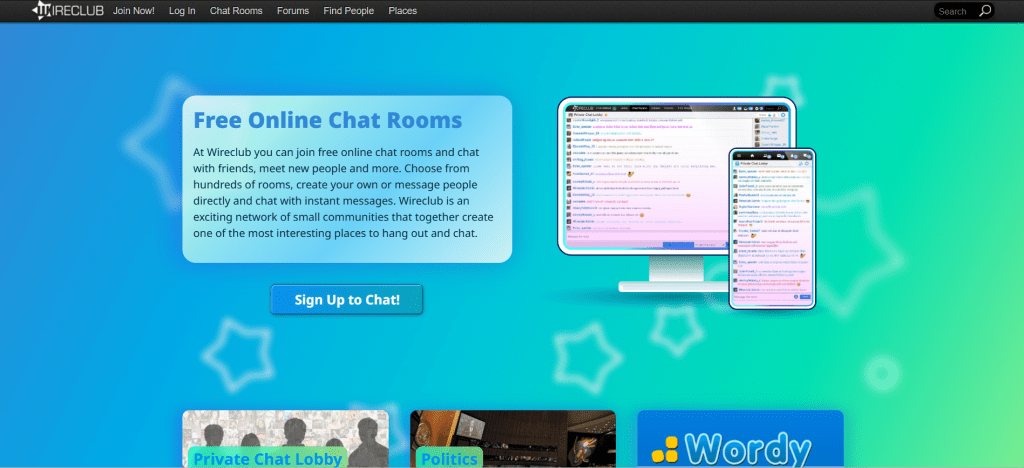
This platform is a topic-based chat community built around public rooms and private messaging. Instead of forcing users into random 1-on-1 matches, it gives them a menu of rooms so they can choose where to join.
What it is:
- A chatroom-driven platform for meeting strangers through shared topics
- A community format where users can return to rooms and build familiarity
- A text-first experience that can feel more controlled than random video chat
What it is not:
- A pure random video chat site that instantly pairs strangers on camera
- A profile-heavy dating service designed for long-term matching
- A private calling tool meant for known contacts
A short, useful reality check belongs here: room-based chat is less “hit next until someone clicks” and more “find the right room and settle in.” That’s the core difference.
How Wireclub Works
The experience is built around rooms, not roulette.
A typical flow looks like this:
- Create a basic account or enter with minimal setup depending on current access rules.
- Browse rooms by topic, category, or popularity.
- Join a room and observe the conversation before participating.
- Post in public chat to engage with multiple people at once.
- Move to private messages when a conversation becomes more personal.
- Switch rooms quickly if the vibe is off, spammy, or too quiet.
- Block and report users who harass, spam links, or push boundaries.
This structure gives users more control than random matching. It also changes the social dynamic. In rooms, reputation can form quickly. People remember usernames. That can be a good thing when the room is friendly, and a bad thing when a room becomes cliquey or messy.
A natural answer block that helps readers decide fast:
Room-based chat feels safer for many users because participation is optional and users can observe before engaging. The trade-off is that poor privacy habits have longer consequences because rooms are persistent and recognition builds over time.
Key Features and Standout Tools
Room platforms live or die by community tools. These are the ones that matter most.
Topic-based chatrooms
Rooms are the main feature. A good room list helps users find people who are already talking about something they care about, instead of starting cold conversations from scratch.
Public + private chat balance
Public rooms create low-pressure interaction. Private messages create deeper conversation. The best experience happens when both are easy to access and easy to control.
Room switching as the “skip button”
In roulette video chat, skipping is the core action. In rooms, switching is the core action. A platform feels better when it makes room hopping quick and frictionless.
Blocking and reporting tools
These matter more on community platforms because repeat contact is more likely. A block needs to feel final. A report needs to feel meaningful.
Discovery and browsing
A platform that helps users find active rooms quickly feels alive. A platform that buries discovery or shows mostly dead rooms feels empty.
User visibility controls (where available)
If users can control who can message them or limit unwanted contact, the experience becomes dramatically more comfortable.
A short answer block that fits naturally:
The real “feature” in chatrooms is the room culture. Tools matter, but culture decides whether the platform feels social or exhausting.
Is Wireclub Anonymous?
It can feel anonymous because users typically operate under a username rather than a real identity. But room-based anonymity is different from roulette anonymity.
Room anonymity usually means:
- users chat under nicknames
- users can avoid sharing personal details
- users can leave rooms instantly
Room anonymity does not mean:
- no recognition over time
- no screenshots
- no social memory (regular users will remember names)
Privacy can slip fast when users:
- share social handles early
- share location details too specifically
- reveal personal routines or identifiable info
- engage in the same room daily with the same username
A short answer block that belongs here:
Room-based chat is semi-anonymous at best. Users stay safest by keeping profiles minimal, avoiding off-platform handles, and treating public rooms as public spaces even when they feel friendly.
Safety, Moderation, and Privacy Controls
Safety in chatrooms is mostly about three things: spam control, harassment control, and what happens in private messages.
What strong safety feels like
- spam links get removed quickly
- repeat offenders don’t dominate rooms
- users can block instantly and stop contact
- moderation is visible in high-traffic rooms
- reporting is easy and not buried
What weak safety feels like
- constant link drops and copy-paste scripts
- trolls derailing rooms repeatedly
- aggressive DMs after a single public message
- users pressuring others to move off-platform fast
- reporting that seems pointless
Privacy controls that matter most
- who can DM (everyone vs limited)
- whether message requests can be filtered
- how visible profiles are
- how effective blocking is
- how quickly rooms can be exited and changed
A natural answer block that helps readers avoid mistakes:
Most problems start in DMs, not in public rooms. The safest approach is to keep conversations public longer, block early when behavior feels pushy, and avoid sharing off-platform contact details until real trust exists.
Pricing, Payments, and Subscription Structure
Most chatroom platforms rely on free core access and optional upgrades. The key is whether paid features improve quality or mostly boost visibility.
Common monetization patterns in room-based chat platforms include:
- Free access to browse rooms and participate
- Optional paid perks that increase visibility or unlock extras
- Credit/coin systems that gate certain actions or features
The biggest issue isn’t price. It’s clarity. Users should be able to answer two questions instantly:
- What can be done for free?
- What does paying actually improve?
A short answer block that fits naturally:
A fair pricing model keeps chat usable without paying and makes premium optional. When the platform constantly pushes upgrades or hides basic controls behind paywalls, the experience starts to feel transactional.
User Experience (Mobile, Desktop, Sign-Up)
Room platforms should feel simple. Enter, browse, join, talk. Anything that interrupts that loop becomes frustrating quickly.
Mobile experience
Mobile users want:
- quick room discovery
- readable chat flow
- easy blocking/reporting
- smooth performance without constant popups
Desktop experience
Desktop tends to feel better for:
- long conversations
- multi-room browsing
- faster typing
- managing multiple private chats
Sign-up friction
Community chat often requires a basic account to reduce abuse and create continuity. That can improve room culture. But if sign-up feels heavy or intrusive, it kills the “drop in and chat” appeal.
A natural answer block that belongs here:
The best UX in room chat is quick entry and quick exits. Users should never feel trapped—either in a room, in a DM, or in a pricing prompt.
Pros and Cons
Pros
- Room-based chatting feels more controlled than roulette matching
- Users can observe before engaging, which reduces pressure
- Easier to find topic-based conversations instead of cold starts
- Can lead to ongoing friendships through consistent rooms
Cons
- Spam and trolling can concentrate in popular rooms
- DMs can become a magnet for unwanted contact
- Anonymity is weaker over time because recognition builds
- Not ideal for users who specifically want instant cam-to-cam video matching
Wireclub vs Alternatives (Include 5–10 alternatives)
Users usually compare room-based platforms with a mix of chatroom communities and a few roulette options for when they want faster 1-on-1 energy.
Here are strong alternatives worth testing:
- Discord communities – interest-based servers with strong admin tools
- MocoSpace – social chatrooms + profiles + messaging
- Talk With Stranger – chatrooms + simple private chat flow
- Tagged – social discovery with messaging
- Skout – social chat + discovery hybrid
- OmeTV – for users who actually want random 1-on-1 video chat
- Chatspin – roulette chat with optional filters
- Camsurf – moderation-forward roulette vibe
- Emerald Chat – more structured Omegle alternative
A short answer block that makes the decision easy:
Room-based platforms are best for topic conversation and community energy. Roulette platforms are best for instant 1-on-1 matching and quick exits. The right choice depends on whether the user wants a room culture or a fast match loop.
Comparison Table: Wireclub vs Other Platforms
| Platform | Best For | Free Version | Moderation | Key Advantage |
|---|---|---|---|---|
| Wireclub | Topic-based chatrooms + private chat | Yes | Medium | Room browsing with a community feel |
| Discord communities | Interest-based group chat | Yes | Strong (server-based) | Strong community controls and moderation tools |
| MocoSpace | Social chatrooms + profiles | Yes | Medium | Community + ongoing interaction |
| Talk With Stranger | Chatrooms + private chat | Yes | Medium | Easy room switching and casual vibe |
| Tagged | Social discovery + messaging | Yes | Medium | Profile-based discovery and messaging |
| Skout | Social chatting with discovery | Yes | Medium | Broad pool and quick conversations |
| OmeTV | 1-on-1 random video chat | Yes | Medium | Fast matching and quick switching |
| Chatspin | Roulette chat + optional filters | Yes | Medium | Lightweight and easy to start |
FAQs: Wireclub
What is Wireclub used for?
It’s used for joining topic-based chatrooms and meeting new people through public rooms and private messaging.
Is it a random video chat platform like Omegle?
No. It’s primarily room-based and text-first rather than roulette-style cam-to-cam matching.
Is it free to use?
Most users can access core chat features for free, with optional upgrades depending on the platform’s structure.
Does it require registration?
Room communities often require basic registration for stability and moderation, though access can vary.
Is it anonymous?
It’s semi-anonymous. Users can use nicknames, but repeated room participation builds recognition over time.
Can people screenshot chats?
Yes. Users should assume screenshots are possible and avoid sharing personal details in public rooms.
Is it safe for beginners?
It can be safer than roulette for beginners because users can observe rooms before engaging, but room quality varies.
Why do some rooms feel spammy?
Busy public rooms attract spam and trolling. Strong moderation and room culture decide how clean they stay.
How do users reduce spam and scams?
Avoid external links, block quickly, report consistently, and don’t move off-platform early.
Should users share WhatsApp or Instagram in chat?
It’s risky early. Sharing handles removes privacy and often increases unwanted contact.
How can users avoid unwanted DMs?
Use blocking tools fast, keep profiles minimal, and stay in public rooms longer before moving private.
Is it better on mobile or desktop?
Desktop often feels better for long chats and typing, while mobile is convenient for quick browsing and casual sessions.
What’s a better alternative for stronger community moderation?
Platforms with server-based admin controls often provide stronger moderation and clearer room rules.
What’s a better option for instant 1-on-1 video chat?
Roulette video platforms are better for users who want immediate cam-to-cam matching rather than rooms.
Can real friendships happen on chatroom platforms?
Yes. Consistent rooms can lead to friendships, but users should move slowly and protect privacy until trust is earned.
Final Verdict: Wireclub
This platform makes the most sense for users who prefer topic-based chatrooms over roulette-style random video chat. The room model gives more control, lowers pressure, and makes it easier to find conversations that start naturally. The downside is that spam and unwanted DMs can show up if moderation is inconsistent, and anonymity fades over time as usernames become familiar.
Used correctly, it can still be a solid place to meet people through conversation. The safest approach is simple: keep profiles minimal, avoid off-platform moves early, block fast when behavior feels pushy, and treat public rooms as public spaces. For users who want a chatroom-first community instead of endless cam skipping, that’s the real appeal of Wireclub.