


Rabbit started as a social video chat and watch-together platform that let people stream content together in shared rooms while chatting in real time.


In simple terms, it was not the same thing as a pure random cam to cam chat site. It sat closer to a group viewing and social interaction tool, which is exactly why many users still search for it when looking for a mix of video, rooms, and live conversation.
The online social chat space moves fast. Platforms rise, shift, rebrand, or disappear, while user expectations keep getting higher: better moderation, easier mobile use, stronger privacy controls, and fewer fake users. That is why a review of older names still matters. People are not just looking for nostalgia. They want a replacement that matches the experience they remember.
Last Updated: February 2026
How This Rabbit Review Was Evaluated
- Moderation strength
- Privacy/anonymity controls
- Pricing transparency
- Ease of use (mobile/desktop)
- Bot/spam prevention
- Filtering options (gender/location if relevant)
- Overall user safety
What Is Rabbit?
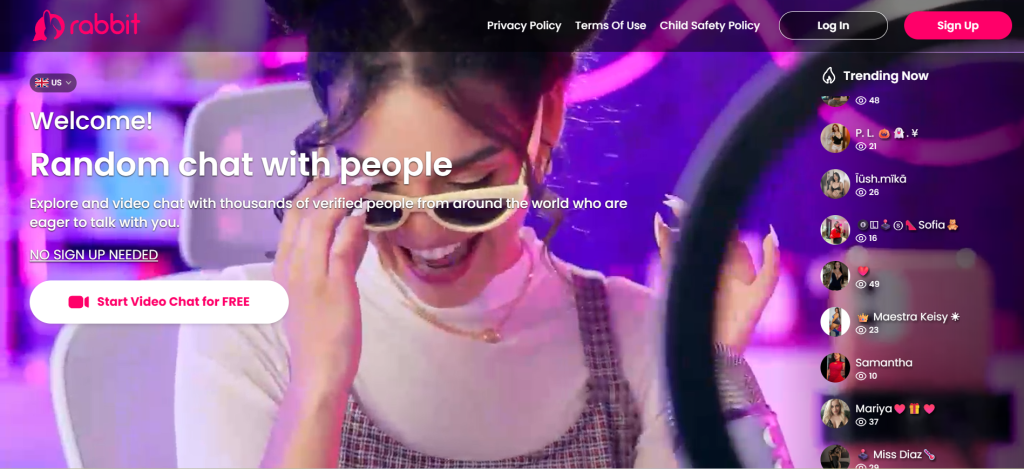
Rabbit (often remembered as Rabb.it) was a social platform built around shared viewing and real-time interaction. Users could create rooms, invite others, chat while watching content, and treat the whole experience like a live hangout rather than a simple one-on-one random video chat.
That distinction matters. A lot of people now type “Rabbit” expecting a random video chat tool, but Rabbit was broader than that. It blended social rooms, watch-together behavior, and chat-based interaction. In today’s terms, it would be closer to a watch party platform plus chat than a pure Omegle alternative.
In practical use, Rabbit appealed to users who wanted:
- Group interaction, not only one-on-one matching
- Shared content viewing while chatting
- Private rooms with invited friends
- A more social “hangout” feel than roulette-style matching
So when a user searches Rabbit today, the real intent is usually one of two things: either they want the old watch-together room experience back, or they want a modern platform that mixes chat with live social interaction.
How Rabbit Works
When it was active, Rabbit centered on rooms. A user could create a room, bring people in, and interact while viewing content together. The platform experience was less about instantly skipping strangers and more about staying in a shared session for longer.
That is a major behavioral difference compared with random video chat platforms. On roulette-style sites, the interaction model is fast: connect, assess, skip, repeat. On Rabbit-style platforms, the interaction model is sticky: join, chat, watch, remain in the room, invite others.
In simple terms, Rabbit worked like this:
- A user joined or created a room.
- People gathered in the same virtual space.
- They watched content together.
- They chatted during the session.
- The room continued as long as users stayed active.
For users searching in the random video chat niche, this means Rabbit should be judged on room flow, group interaction quality, and social comfort — not only on speed of matching.
Key Features and Standout Tools
Rabbit stood out because it was not trying to be “just another random stranger chat site.” It tried to make online interaction feel more like hanging out with others in a shared digital room.
Key features users typically associated with the experience included:
- Shared rooms for group participation
- Real-time chat while content played
- Social interaction layered on top of viewing
- Invite-based use in many cases
- A more community-like feel than quick-skip platforms
Why this mattered: users who dislike constant random matching often prefer room-based experiences. A room gives more context, more continuity, and more control over who stays.
A useful way to think about it is this: Rabbit was stronger for social co-viewing than for anonymous one-on-one cam chat. That makes it attractive to a different kind of user intent — someone who values conversation flow over instant novelty.
Is Rabbit Anonymous?
Rabbit was not primarily built as an “anonymous random cam chat” platform in the way many roulette-based services are marketed. It was more social and room-oriented, which usually means the experience leans toward semi-identified interaction (usernames, invites, room presence, repeated interactions) rather than fully anonymous drop-in matching.
That does not automatically mean unsafe or unsafe-by-design. It simply means users should not assume the same anonymity model as a classic stranger roulette chat site.
For any platform in this category, anonymity is really a spectrum:
- Full anonymous random matching (least identity setup, fastest entry)
- Username-based social rooms (some identity persistence)
- Profile-heavy platforms (most identity exposure and repeatability)
Users looking for a Rabbit-like experience should check:
- Whether real names are required
- Whether rooms are public or private
- Whether invite links expose room access broadly
- Whether chat history or room history is retained
- Whether blocking/reporting is available
A short rule of thumb: if a platform is room-based and social, users should assume lower anonymity than a pure random cam to cam chat tool.
Safety, Moderation, and Privacy Controls
Safety in social chat platforms depends on two things at once: platform controls and user behavior. A platform can have reporting tools, but if users overshare too early, risk still climbs fast.
For Rabbit-style experiences, the most important safety checks are:
- Room privacy settings (public vs private)
- Reporting and blocking tools
- Moderator presence or enforcement signals
- Link-sharing controls
- Spam handling and bot resistance
- Clear rules on abuse, harassment, and explicit content
Privacy controls matter just as much. In social room environments, users tend to stay longer than they would on a random match site. Longer sessions can lead to more personal details being shared. That is where risk increases.
A safer approach includes:
- Using a separate username
- Avoiding personal contact details in public rooms
- Keeping cameras off until trust is established
- Avoiding external links from unknown users
- Leaving rooms quickly when behavior becomes suspicious
For readers coming from an Omegle alternative mindset, this section is the biggest adjustment: Rabbit-style platforms can feel friendlier, but “friendlier” does not always mean safer. Structure helps, but judgment still matters.
Pricing, Payments, and Subscription Structure
Rabbit was remembered mostly for its social functionality rather than a heavy “token and upsell” model associated with many cam platforms. That said, users searching Rabbit alternatives today often end up on services with very different monetization structures.
This creates confusion. A person searching for a watch-and-chat social platform may land on:
- Free random video chat sites
- Freemium social platforms
- Cam sites with credit systems
- Dating platforms with subscriptions
- Premium room/community apps
That is why pricing transparency is a major evaluation point in this review framework. Before joining any Rabbit alternative, users should confirm:
- What is free at signup
- What features are locked
- Whether billing is recurring
- Whether cancellation steps are clear
- Whether messaging/video/chat filters cost extra
If the platform makes users click through multiple screens before showing pricing, that is already a red flag for transparency.
User Experience (Mobile, Desktop, Sign-Up)
User experience decides whether a platform gets used once or becomes part of someone’s routine. A Rabbit-like experience usually depends on smooth room access, stable chat, and low friction for inviting or joining others.
Strong user experience signals include:
- Fast load time on desktop
- Mobile browser compatibility
- Clear room or chat navigation
- Easy mute/block/report actions
- Minimal forced setup before entry
- Stable performance during longer sessions
Weak user experience signals include:
- Endless popups before entry
- Confusing room controls
- Broken mobile layout
- Slow loading or disconnect loops
- Aggressive redirects
- Too many upsell interruptions
For users who mainly want random video chat with strangers, a simple roulette-style interface may still feel easier than a Rabbit-style room system. But for people who want longer conversations and group energy, room-based platforms can be a better fit when the interface is clean.
Pros and Cons
Every platform style makes trade-offs, and Rabbit-style experiences are no different. The strengths that make room-based social chat attractive can also create friction for users who want instant anonymous matching.
Pros
- Better for group interaction than one-on-one roulette chat
- Shared activity can make conversation easier
- More natural “hangout” feel
- Good for users who dislike constant skipping
- Can support stronger continuity in conversations
Cons
- Usually less anonymous than pure stranger chat
- Room quality depends heavily on who joins
- Can attract spam if moderation is weak
- Not ideal for users who want instant one-click random matches
- Searchers may confuse it with cam sites or dating platforms
A simple takeaway fits here: Rabbit-style experiences are best for social interaction with context, while random video chat platforms are best for speed and novelty.
Rabbit vs Alternatives
People searching for Rabbit today are usually looking for one of three replacement paths:
- Watch-together/social room alternatives
Best for users who want group interaction and shared experiences. - Random video chat alternatives
Best for users who want fast one-on-one cam to cam chat with strangers. - Community chat or hybrid platforms
Best for users who want rooms, repeat interactions, and more structure.
For the random video chat niche specifically, the comparison is not about “which platform is identical to Rabbit,” because most are not. The better question is: which platform matches the user’s real intent?
- If the user wants fast random matching, platforms like OmeTV, Chatspin, or Camsurf may feel closer.
- If the user wants structured social interaction, room/community platforms fit better.
- If the user wants filters and stronger control, freemium or premium tools may offer more options.
This is why keyword intent matters. The word Rabbit can attract users searching for social video rooms, watch parties, or even generic chat nostalgia. A good review should separate those intents clearly instead of pretending all video chat platforms work the same way.
Comparison Table: Rabbit vs Other Platforms
| Platform | Best For | Free Version | Moderation | Key Advantage |
|---|---|---|---|---|
| Rabbit (legacy concept) | Social watch-together + chat rooms | Historically varied | Medium (platform-era dependent) | Shared room experience, not just random matching |
| OmeTV | Fast random 1-on-1 video chats | Yes | Medium | Quick connect-and-skip flow |
| Chatspin | Lightweight roulette chat + filters | Yes (limited) | Medium | Easy onboarding with optional filters |
| Camsurf | Users prioritizing moderation feel | Yes | Stronger | Safer-feel random chat experience |
| Camgo | Simple random video chat start | Yes | Medium | Clean interface and low friction |
| Emerald Chat | More structured matching | Yes (limited) | Medium–Stronger | Interest-based matching and better conversation fit |
| Discord communities / group calls | Ongoing community interaction | Yes | Strong (server-dependent) | Repeat interactions and moderated communities |
| Watch-party / room-based platforms | Shared viewing with friends | Often freemium | Medium–Strong | Best for group sessions over random strangers |
FAQs: Rabbit
What was Rabbit used for?
Rabbit was mainly used for social interaction in shared rooms, often centered around watching content together and chatting in real time.
Was Rabbit a random video chat site like Omegle?
Not exactly. It was more room-based and social than a pure one-on-one random stranger cam chat platform.
Is Rabbit still available?
Many users search Rabbit because they remember the original experience, but most are now looking for alternatives rather than the exact same platform.
Why do people still search Rabbit?
Because the concept was memorable: shared viewing plus live chat in a social room format. That experience still has demand.
Is Rabbit anonymous?
It was not designed around the same anonymity model as classic roulette-style random video chat sites, so users should not assume full anonymity.
What is the closest Rabbit alternative today?
That depends on the goal. For watch-together and group rooms, users should choose room-based platforms. For random cam chat, roulette-style alternatives are a better fit.
Can Rabbit-style platforms be safer than random video chat?
Sometimes, yes — especially if they use private rooms, moderation tools, and clear reporting systems. But safety still depends on user behavior.
Are Rabbit alternatives free?
Some offer free access, but many use freemium models. Users should always check what features are truly free before signing up.
What should users check before joining a Rabbit alternative?
Privacy settings, moderation tools, pricing clarity, mobile usability, and how easy it is to block or report abusive users.
Are room-based chat platforms better than random chat platforms?
They are better for some users, especially those who prefer longer conversations and group interaction instead of fast random matching.
Can users find cam to cam chat on Rabbit alternatives?
Some alternatives support video calls or live room interaction, but not all are built for direct random cam to cam matching.
What are the biggest risks on social video chat platforms?
Oversharing personal details, scam links, spam accounts, weak moderation, and confusing subscription charges on some services.
How can users stay safer on Rabbit-style platforms?
Use a separate username, avoid sharing personal contact details, keep interactions on-platform first, and leave/report suspicious rooms quickly.
Is Rabbit a good keyword for random video chat content?
It can be, but intent is mixed. Some users want nostalgia or watch-party tools, while others want stranger chat alternatives.
Final Verdict: Rabbit
Rabbit remains a strong keyword because it represents a specific kind of online social experience: shared rooms, live interaction, and a more relaxed hangout style than fast-skip random video chat. For users in the modern chat-with-strangers market, the best move is to first decide whether they want group social rooms, private watch-together sessions, or true one-on-one roulette matching. That clarity makes it much easier to choose the right platform and avoid confusing options that do not match the original Rabbit experience.


